

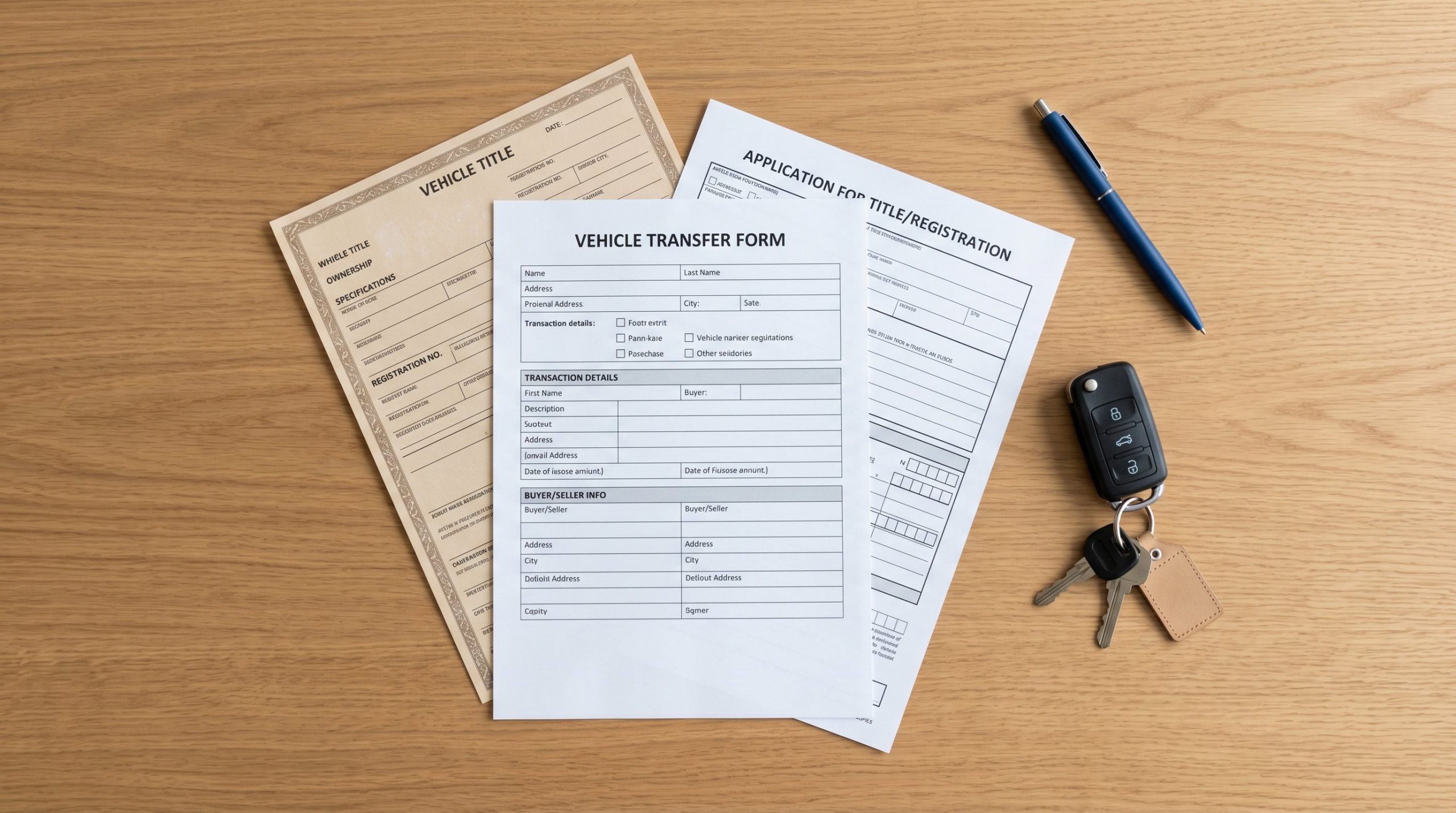
To sell a car, you will need at minimum: the vehicle title, a government-issued ID, an odometer disclosure statement, and a bill of sale. If the car has an outstanding loan, you will also need a lien release from the lender before or at the time of the transaction.
Here is what each document is, why it matters, and what to do if you do not have it.
The Core Documents
Vehicle Title
The title is the most important document in any car sale. It proves you are the legal owner and is the mechanism by which ownership transfers to the buyer. Without a clear title, the sale cannot be completed.
The title should show your name as the registered owner, with no liens listed unless the lien will be resolved as part of the transaction. When you sign over the title to a buyer, you typically sign the back of the document in the seller section along with the odometer reading and the date.
If you cannot find your title: Contact your state DMV to request a duplicate title. The process and timeline vary by state but most issue replacements within one to three weeks for a fee that is typically under $30. Do not attempt to sell without the title. Buyers, whether dealers or private parties, will not complete the transaction without it.
Government-Issued ID
A valid driver’s license is standard. The buyer or dealer needs to verify your identity and confirm that the person signing the title matches the owner on record. Some states require the ID information to appear on the bill of sale.
Odometer Disclosure Statement
Federal law requires an odometer disclosure for most vehicle sales. This document confirms the mileage at the time of sale and protects the buyer from odometer fraud. For most transactions, the odometer disclosure is incorporated into the title itself or into the bill of sale, so it is not always a separate document. Check your state’s requirements, but in practice most dealers handle this as part of their standard paperwork.
Bill of Sale
A bill of sale is a written record of the transaction: who sold the car, who bought it, the agreed price, the date, and the vehicle’s identifying information including the VIN. Some states require a bill of sale for registration purposes. Even where it is not legally required, it is a good practice for both parties. In a dealer transaction, the dealer prepares the bill of sale. In a private sale, either party can draft it, and templates are widely available from state DMV websites.
If the Car Has an Outstanding Loan
Selling a car with a loan on it requires an additional step: the lien must be resolved as part of the transaction. The lender holds a security interest in the vehicle and must be paid off before clear ownership can transfer.
In a dealer transaction, the dealer typically handles the lien payoff directly with the lender as part of the sale. You will need to provide your lender’s contact information and your loan account number. Bring your loan documents to the dealership when you go to complete the sale.
In a private sale, the process is more complex. You and the buyer need to coordinate the payoff with the lender simultaneously with the transfer of funds, which many private buyers are not comfortable navigating. One common approach is to complete the transaction at your bank, where the lender can verify the payoff and release the title on the spot.
Lien release: Once the loan is paid off, the lender issues a lien release document, which clears the title of any encumbrance. In dealer transactions, the dealer manages this. In private sales, you may need to obtain the lien release from your lender and provide it to the buyer separately.
How to get your payoff amount: Call your lender and request a 10-day payoff quote. This is the exact amount needed to satisfy the loan as of a specific date, accounting for any interest that accrues in the interim. Know this number before any sale conversation so you understand the minimum the sale needs to cover.
Helpful Supporting Documents
These are not required in most transactions but can support a better offer and a smoother sale.
- Service records: Documented maintenance history adds credibility to your condition claims and can positively influence the offer, particularly with platforms that weight vehicle history in their pricing.
- Original window sticker or Monroney label: Useful for establishing the original trim and options, particularly for older vehicles where the original equipment affects value.
- Warranty documents: If any factory or extended warranty is still active and transferable, documentation of that coverage can add value to the sale.
- Vehicle history report: Running your own CarFax or AutoCheck before selling lets you see what a buyer will see. If there are surprises in the report, it is better to know in advance than to have a buyer discover them at inspection.
Quick Checklist Before You Sell
- Vehicle title located and in your name
- Valid government-issued ID
- Loan payoff amount obtained from lender if applicable
- Loan account documents available to bring to the dealer if applicable
- All sets of keys accounted for
- Service records gathered if available
- Vehicle history report reviewed
How Selling Through a Dealer Simplifies the Paperwork
One of the underappreciated advantages of selling through a dealer or a dealer platform is that the dealer handles the bulk of the paperwork. They prepare the bill of sale, manage the title transfer, handle odometer disclosure forms, coordinate the lien payoff if there is a loan, and file what needs to be filed with the state. You sign what needs to be signed, hand over the title and your loan documents if applicable, and leave with a check.
In a private sale, all of that coordination falls on you and the buyer to figure out together, which is one of the reasons private transactions take longer and fall through more often.
When you sell through Clairvo and accept a competing dealer offer, the completing dealer handles the paperwork at their location the same day. You bring the documents on this checklist, they handle the rest.
Free to use. No obligation to accept. Licensed dealers only.