

Will the off-lease wave fix the 2026 used car sourcing shortage? No. The volume of returning lease vehicles is too small and too concentrated to refill the auction lane, so dealers who wait for off-lease supply to solve their inventory problem will fall behind. The stores that win are building direct sourcing channels now instead of counting on the lane to recover.
The conventional wisdom on 2026 used car inventory has been that the off-lease wave will eventually fix everything. Lease originations during the pandemic years were unusually low, the thinking goes, but as new lease activity recovers and 2022-2024 leases mature into the used market, supply will normalize. Off-lease returns will hit roughly 3.2 million units in 2026, up meaningfully from 2025. Problem solved.
That story has a major problem. A 3.2 million unit return year is still millions short of the well-stocked years that dealers built their acquisition playbooks around. Historical off-lease volumes regularly exceeded 5 million units annually before 2020. The math does not get back to those levels in 2026, 2027, or arguably any year on the visible horizon. Dealers who are waiting for off-lease supply to fix their sourcing problem are waiting for a recovery that does not arrive.
This piece breaks down why the off-lease story is structurally misleading, what it actually means for dealer acquisition strategy in the second half of 2026, and where the inventory has to come from if not from the wholesale lane.
Free to evaluate. Real consumer sellers in your market. Bid alongside competing dealers.
The Off-Lease Math Does Not Work
Off-lease returns are projected to bottom out around 1.8 million units in 2024-2025 before modestly recovering to roughly 3.2 million units in 2026. That recovery sounds positive in isolation. In context, it is a structural shortfall.
Pre-2020, the US used market regularly saw 4.5 to 5.5 million off-lease vehicles return annually. Those units were the high-quality core of franchise dealer CPO inventory, the cleanest auction lane stock, and the primary source of three-to-four-year-old vehicles that command the strongest retail margins. The 2026 projection represents roughly 60 to 70 percent of what the system was designed to absorb.
That gap does not close in 2027 or 2028 either. Lease originations in 2024 remained well below pre-pandemic norms because high used car prices and elevated interest rates made leasing comparatively unattractive. The vehicles that would mature into 2027 and 2028 off-lease supply were never leased in the first place. The wave that built up the well-stocked years simply did not happen, and you cannot retroactively create inventory that was never put in the pipeline.
What This Means for Dealer Sourcing Strategy
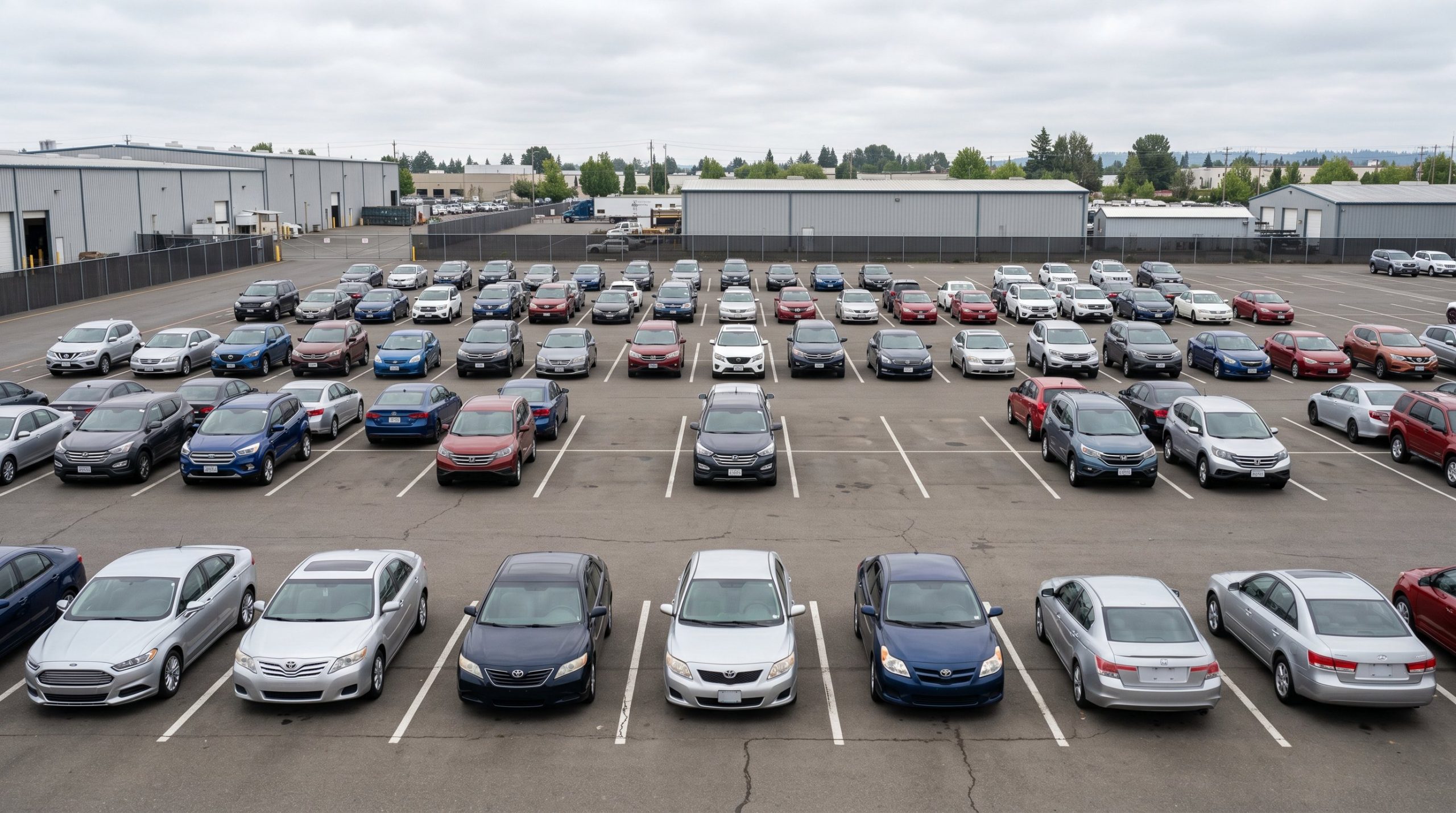
The implication is uncomfortable but clear: the wholesale lane is not going to provide enough inventory at acceptable cost for the rest of this decade. Dealers who rely on auctions as their primary acquisition channel will continue to face the conditions of early 2026: tighter days supply, higher wholesale prices, and aggressive competition from national buyers. Our broader analysis of dealer sourcing strategy covers the structural shift in more depth.
Auction Quality Has Declined Along With Quantity
Beyond the volume problem, the quality of available auction inventory has degraded. When off-lease returns drop, the cleanest CPO-eligible units leave the auction lane first. What remains is older, higher-mileage, and more variable in condition. Reconditioning costs on these units run higher, days-to-list run longer, and front-end gross compresses accordingly.
National Buyers Have Structural Advantages in the Lane
Carvana and CarMax have built sourcing and logistics infrastructure that lets them buy nationally and resell into whatever market produces the strongest price. A local franchise dealer bidding against a national buyer for the same auction unit is competing against a buyer with lower per-unit logistics costs and broader retail distribution. The Carvana vs CarMax dynamic is well documented from the seller side, but the dealer-side implication is that traditional channels increasingly favor the largest players.
The Math Forces a Pivot to Direct Acquisition
If auction supply is structurally short and quality is degraded, the only sustainable answer is sourcing vehicles before they enter the wholesale channel. That means service drive sourcing, CRM equity mining, and direct-from-consumer acquisition platforms. Each of these channels has different operational requirements but the same underlying logic: get to the vehicle before the auction lane does.
Free to evaluate. See how Clairvo routes local consumer sellers to participating dealers.
Where Inventory Has to Come From If Not the Auction Lane
Three channels can fill the gap, with different operational profiles and ramp times.
Channel 1: Service Drive Sourcing
Your existing service customers are driving vehicles you have documented history on. Many are in positive equity positions and have no idea. AutoAlert and similar tools systematize the process of identifying these customers and engaging them at the service appointment.
The advantages are real: vehicles you know, customers you have relationships with, no acquisition fees beyond your operational cost. The challenge is operational, not technical. Most stores have a meaningful disconnect between service and sales, and bridging it requires process and culture work that takes months to embed. Stores that have done this work effectively report reducing auction purchases by 50 to 70 percent.
Channel 2: CRM Equity Mining
Beyond active service customers, every dealership has thousands of sold customers in DMS history. Many are 24 to 48 months into their current purchase, in positive equity positions, and approaching the natural reshop window. Outreach to these customers at the right moment captures vehicles you would otherwise lose to a competing store or a private sale.
This channel requires data work and disciplined follow-through. The dealers winning here are not the ones with the best CRM software; they are the ones who actually use the customer data they already have.
Channel 3: Direct-from-Consumer Platforms
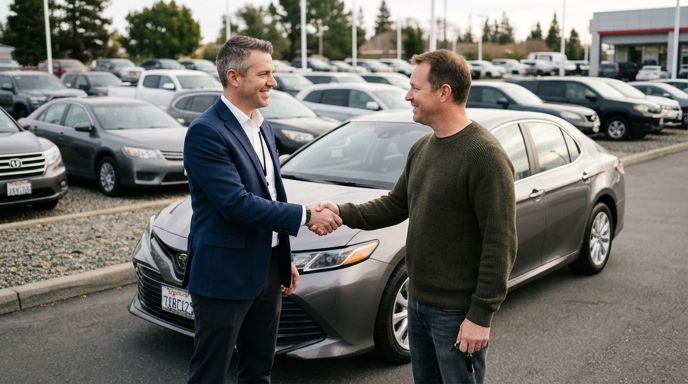
The fastest-ramping option for most stores is plugging into a direct-from-consumer acquisition platform that brings local sellers to you. Clairvo operates in this category, routing consumer sellers in your market to multiple participating dealers who submit competing bids. Sellers see the offers, choose one, and complete the sale with the winning dealer. From the dealer side, you see local consumer inventory you would otherwise lose to Carvana, CarMax, or a private sale. More on how Clairvo works.
The operational requirement is minimal. You bid on vehicles that fit your inventory needs and walk away from ones that do not. There is no required volume commitment, no upfront fee, and no infrastructure to build inside your store. The vehicles you acquire come in cleaner than auction units in most cases because they are coming directly from a consumer owner rather than through fleet, lease, or wholesale channels.
The Strategic Point Most Dealers Are Missing
The off-lease shortage is not a 2026 problem that resolves in 2027. It is a structural feature of the next several years of the used car market. Dealers who keep their sourcing strategy unchanged in expectation of an eventual return to normal are going to spend the rest of this decade competing on price for declining auction inventory while national buyers eat their consumer-direct opportunities.
The dealers who win the next several years are the ones who treat 2026 as the moment to diversify away from wholesale dependence. That does not mean abandoning the auction lane entirely. It means building two or three complementary direct-acquisition channels so the auction lane becomes one input among several, rather than the entire sourcing engine. Practical lead generation strategies for dealers cover the complementary side of this work.
Frequently Asked Questions
How many off-lease vehicles will return to the used market in 2026?
Industry projections suggest approximately 3.2 million units in 2026, up from a low of roughly 1.8 million in 2024-2025. This is well below the 4.5 to 5.5 million annual returns that were common before 2020, and the gap does not close in the visible future because lease originations during 2023-2024 remained well below pre-pandemic norms.
Why are off-lease returns still short if leasing is recovering?
The vehicles that would have matured into 2026-2028 off-lease supply were leased in 2023-2024, when leasing activity was structurally suppressed by high used car prices and elevated interest rates. You cannot retroactively create lease maturities from leases that were never originated. The recovery in current lease activity affects 2028-2030 supply, not the immediate window.
What is the biggest mistake dealers are making with sourcing in 2026?
Continuing to treat the wholesale auction lane as the primary acquisition channel and waiting for supply conditions to improve. The conditions are not improving on a meaningful timeline. Dealers who pivot to direct-from-consumer and service-drive sourcing now position themselves for the next several years; dealers who wait will keep competing on price in a tight lane against larger buyers.
How does Clairvo fit into a dealer sourcing strategy?
Clairvo is a direct-from-consumer channel that routes local sellers in your market to participating dealers, who submit competing bids. The vehicles you acquire come in cleaner than auction units in most cases, with established consumer ownership history. It is one of three or four channels we recommend dealers build out alongside auction, service drive, and CRM equity mining. There is no volume commitment or upfront fee to participate.
Off-lease supply is only one input into your acquisition math. Our dealership ROI calculator for vehicle acquisition lets you model cost per unit across the channels you actually use, so you can see where the gaps in off-lease volume are cheapest to fill.
Dealers can also review current listings and requirements directly at dealerforesite.com before reaching out.
See what direct-from-consumer sourcing looks like for your store.