


How do franchise dealers source used cars in 2026? Franchise dealers build used inventory from several channels at once: trade-ins from new-car sales, the service drive, off-lease and certified pre-owned returns, auctions, and increasingly direct-from-consumer acquisition. The dealers who stay profitable diversify across these channels rather than leaning on auctions, where competition and cost are highest. Here is how each channel works and where the leverage is.
Franchise dealers have sourcing advantages independents do not, but they face the same cost pressure on acquisition. Knowing which channels deliver the best inventory at the lowest cost is what separates strong used operations from struggling ones. For the broader landscape, see how dealers source used car inventory in 2026.
Trade-ins from new-car sales
The single biggest franchise advantage is the steady flow of trade-ins from new-car customers. These cars come in at known condition with existing customer history, often below auction cost. The challenge is that negative equity is complicating trade-ins, as covered in our sourcing guide.
The service drive
Every car in for service is a potential acquisition. A disciplined service-drive program that identifies and makes offers on desirable vehicles is one of the lowest-cost sourcing channels a franchise dealer has.
Off-lease and certified pre-owned
Lease returns feed the CPO pipeline, which carries strong margins and manufacturer support. Availability shifts with lease-origination cycles, so this channel ebbs and flows.
Auctions
Auctions fill gaps but are the most competitive and expensive channel, and carrying cost adds up on units that do not turn quickly. Franchise dealers use auctions to round out inventory rather than as a primary source. See used car acquisition cost compared for how the channels stack up on cost.
Direct-from-consumer acquisition
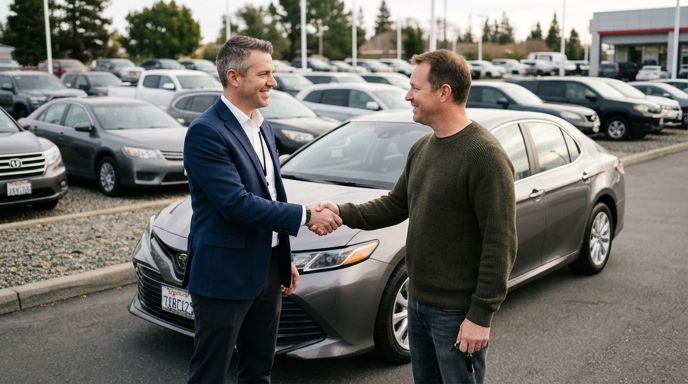
The fastest-growing channel is buying directly from local owners. Competing-offer platforms let franchise dealers acquire clean, in-demand cars from consumers in known condition, often at a better cost than auction. It also reaches sellers who would never set foot on the lot. This is where competing with Carvana and CarMax for inventory increasingly plays out.
To put numbers behind these channels, our dealership ROI calculator for vehicle acquisition lets you model cost per unit across trade-ins, auctions, the service drive, and direct-from-consumer sourcing side by side.
Frequently asked questions
What is the cheapest way for franchise dealers to source used cars?
The service drive and trade-ins are typically the lowest-cost channels because the cars come in at known condition without auction fees or competition. Direct-from-consumer acquisition is also cost-effective.
Why not just rely on auctions?
Auctions are the most competitive and expensive channel, and slow-turning units accrue carrying cost. Dealers who lean too heavily on auctions tend to pay more per unit and protect less gross.
How does direct-from-consumer sourcing work for franchise dealers?
Competing-offer platforms route local sellers to participating dealers, who bid on the cars. It reaches consumers who would not visit the lot and delivers cars in known condition, often below auction cost.
What is the biggest franchise sourcing advantage?
The steady flow of trade-ins from new-car sales, which arrive at known condition and customer history, often below auction cost, though negative equity is making some trade-ins harder to structure.
If you want to add a competing-offer channel to your acquisition mix, it costs nothing to see how the Clairvo dealer network fits into the way you already source.
Dealers can also review current listings and requirements directly at dealerforesite.com before reaching out.