


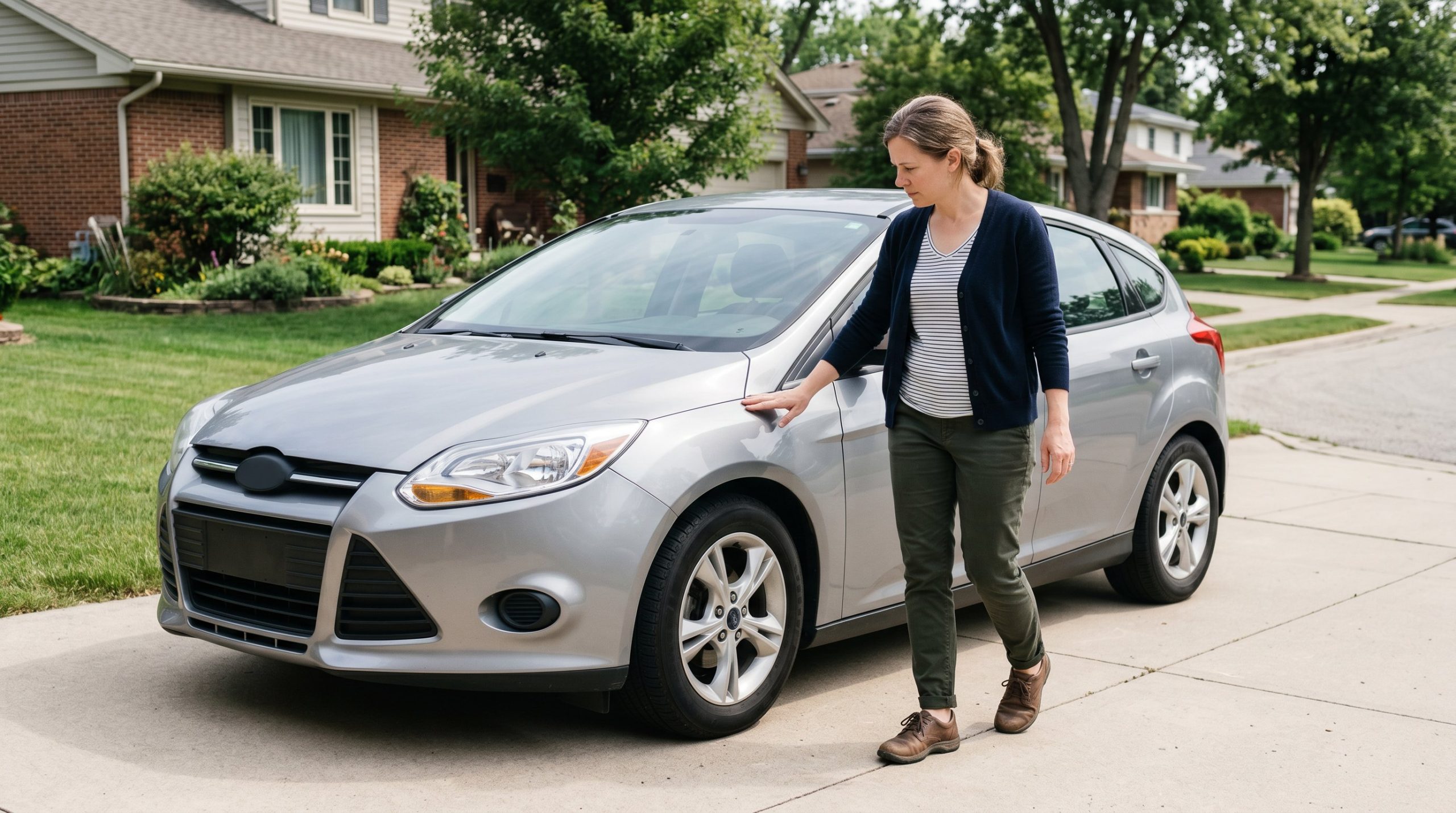
How much can you actually sell your car for? Your car’s sale price depends on vehicle-specific factors, its condition, regional market conditions, and the selling channel you choose. There is no single number for any vehicle. The most reliable way to find yours is to gather competing offers, because a real offer reflects what a buyer will actually pay better than any estimate.
What your car will actually sell for depends on a combination of vehicle-specific factors, condition, regional market conditions, and which selling channel you choose. There is no single number for any vehicle, and the gap between what a calculator estimates and what a real buyer will pay is often substantial. The most accurate way to know what your car is worth right now is to get actual offers from actual buyers.
Here is what genuinely determines the number, in roughly the order of impact.
If you have already gotten different numbers from KBB, Edmunds, Carvana, and ChatGPT and are wondering why they all disagree, our companion piece on why every car valuation tool gives a different answer breaks down each one. This post focuses on the underlying factors that determine the value any tool will produce.
Vehicle-Specific Factors
Make and Model
Different brands and models depreciate at very different rates. Toyota and Honda generally hold value better than most American and European brands. Luxury vehicles depreciate steeply in the early years but stabilize later. Specialty and performance vehicles have unpredictable value patterns depending on collector interest and model demand.
The depreciation curve for your specific make and model is the single biggest factor in what your car is worth at any given age and mileage. This is true regardless of how well-maintained your specific example is.
Year and Age
Cars lose value most rapidly in the first three years and continue declining at a slower rate after that. A two-year-old vehicle might be worth 60 to 70 percent of its original price. A five-year-old vehicle might be worth 35 to 50 percent. A ten-year-old vehicle is typically worth 15 to 25 percent of original price unless it is a model with strong long-term value retention.
Mileage
Average mileage is roughly 12,000 to 15,000 miles per year. Vehicles significantly below that range get premium offers. Vehicles significantly above it get discounted offers. The market penalizes high mileage disproportionately at certain thresholds (75,000, 100,000, and 150,000 are common breakpoints where pricing steps down meaningfully).
Trim Level and Options
Higher trim levels and option packages add resale value, but not at a 1:1 ratio with what they cost when new. A premium audio system that added $1,500 to the original price might add $300 to resale value five years later. Leather, sunroof, navigation, and driver assistance packages are the options that most consistently retain value.
Color
Color affects resale value more than most sellers realize. White, black, silver, and gray are neutral colors that have the broadest buyer appeal and retain value well. Unusual colors like bright reds, blues, oranges, and yellows can take longer to sell and may produce lower dealer offers because the dealer is selling to a narrower segment of buyers.
Condition Factors
Cosmetic Condition
Visible damage reduces offers in fairly predictable ways. Scratches, dents, and worn interiors all generate deductions at appraisal. Minor cosmetic issues can be addressed cheaply before selling and typically return more than they cost. Major damage requires either disclosure and a discounted offer or proper repair before selling.
Mechanical Condition
Known mechanical problems discovered at inspection trigger significant deductions or rejected offers. The mainstream dealer platforms have limited tolerance for vehicles with mechanical issues because they need to recondition them for retail resale. A car that runs and drives reliably gets meaningfully better offers than one with known problems.
Accident History
Accident history typically reduces value by 10 to 25 percent depending on severity. Minor fender-bender level damage with proper repair history may have minimal impact. Significant collision history affecting structural components or airbags can substantially reduce value. Salvage and branded titles reduce value more dramatically and may make the vehicle ineligible for mainstream dealer platforms.
Number of Previous Owners
Single-owner vehicles command modest premiums over multi-owner vehicles of similar age and condition. The premium is small but real, particularly when documented through CarFax or AutoCheck reports.
Market Factors
Regional Demand
Vehicle values vary significantly by region. Trucks and large SUVs command higher prices in the South and Midwest where demand is concentrated. Electric vehicles and hybrids do better on the coasts and in urban markets with charging infrastructure. All-wheel-drive vehicles get premium offers in regions with significant snowfall. A car that is worth $18,000 in one market might be worth $20,000 in another for the same vehicle in identical condition.
Current Used Car Market Conditions
The used car market as a whole moves in cycles. The pandemic-era supply crunch pushed used car values to historic highs in 2021 and 2022. Values have since softened but remain above long-term historical norms. Selling in a strong used car market produces meaningfully better offers than selling in a weak one.
Gas Prices
Rising gas prices push demand toward fuel-efficient vehicles and depress demand for trucks and large SUVs. Falling gas prices have the opposite effect. The shift can be substantial within a few months when gas prices move significantly.
Why Calculator Estimates Differ From Actual Offers
KBB, Edmunds, and similar valuation tools provide useful starting points but consistently differ from actual dealer offers. The reasons are structural.
Calculator estimates are based on averaged data across markets, assumed average condition, and assumed average market conditions. Your specific car in your specific market is rarely average across all those dimensions.
Calculator estimates also typically lean toward the optimistic end of the dealer offer range to keep consumers engaged. KBB trade-in value often comes in higher than what most dealers will actually offer because the calculator is anchored to keep sellers hopeful, while dealers price conservatively for their margin requirements.
Private sale estimates similarly lean toward the high end. The number you might get from a private buyer in a strong market with the right buyer is the ceiling, not the typical outcome.
The Most Accurate Signal
Every factor above contributes to what your car is worth, but no calculator or general guide can tell you what multiple real buyers in your specific market will pay today for your specific vehicle. That information only comes from actual offers from actual buyers.
A single offer gives you one data point. Multiple competing offers give you a market. When several dealers independently submit bids on the same vehicle, the range of those bids tells you what the car is genuinely worth right now, accounting for all the local and inventory-specific factors that any general estimate cannot capture.
Clairvo generates exactly that picture. You submit your vehicle details once and multiple licensed dealers each independently review the listing and submit competing bids. The bids that come back tell you what your car is worth to the market today in a way no calculator or estimate can.
Frequently Asked Questions
How much can I sell my car for?
It depends on your specific vehicle, its condition, your regional market, and the selling channel you choose. There is no single figure for any car. Gathering competing offers is the most reliable way to find what your car will actually sell for.
What determines my car’s value the most?
Vehicle-specific factors like make, model, mileage, and trim, combined with condition and current demand for your car in your region. Demand shifts by season and location, which is why the same car can be worth more at one time or place than another.
Why do calculator estimates differ from real offers?
Estimates are predictions based on averages, while an offer is a commitment to pay for your specific car in its actual condition. Real offers reflect current local demand more precisely than any calculator, which is why they are the more accurate signal.
What is the best way to get the most for my car?
Gather competing offers and compare them. When multiple buyers bid on your car, the top offer rises, and you can see the full range before deciding rather than accepting a single number.
Free to use. No obligation to accept. Licensed dealers only.


