

How do dealers build a street sourcing program that consistently delivers? By turning it from a buzzword into a repeatable process: defined outreach, clear valuation, fast offers, and staff accountable for results. Most dealers know street sourcing matters but never operationalize it, and the gap between knowing and doing is where the inventory advantage lives.
Every dealer principal in 2026 has heard the phrase ‘street sourcing’ enough times to know it matters. Fewer have actually built it into something that consistently delivers vehicles. The gap between knowing street sourcing is the answer to the auction supply problem and operating a street sourcing program that produces 15 to 30 vehicles per month is wide, and it is mostly an execution gap rather than a knowledge gap.
This piece is the tactical version of the conversation. Our broader analysis of how dealers are sourcing used car inventory in 2026 covers what street sourcing is and why it matters. This post covers how to actually run it inside your store: the operational pillars, the team roles, the KPIs that matter, and the 90-day build plan that gets you from zero to a functional program.
Free to evaluate. Bring incoming consumer-direct inventory through Clairvo while you build internal channels.
What Street Sourcing Actually Means at the Store Level
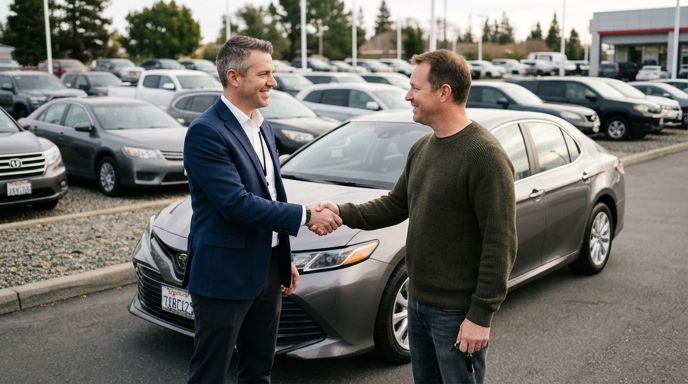
Street sourcing is the operational discipline of acquiring used vehicles from your own customers and community, rather than from wholesale auctions or trade-in transactions tied to a new vehicle purchase. The defining characteristic is that the vehicle is acquired without a corresponding sale on the other side of the transaction.
Three distinct channels make up most street sourcing programs:
- Service drive sourcing: Active service customers driving vehicles you have documented history on. The largest single channel for most franchise dealers, and the one with the highest acquisition quality.
- CRM equity mining: Past customers in DMS history who are in positive equity positions and approaching natural reshop windows. Outreach-driven rather than inbound.
- Inbound consumer-direct leads: Consumers who reach the store directly through online forms, phone calls, or third-party platforms inquiring about selling their vehicle. Pure acquisition with no sales tie-in.
Each channel has different operational requirements, different conversion rates, and different costs. A complete street sourcing program runs all three in parallel, with different team members owning each.
The Four Operational Pillars That Determine Whether Street Sourcing Works
Pillar 1: Clear Ownership and Defined Roles
The single biggest reason street sourcing programs fail is that no one specific person owns the outcomes. Service drive sourcing requires service advisors to identify candidate vehicles, a sales-side acquisition specialist to handle the appraisal and offer, and a manager to track the funnel and resolve handoff issues. If any one of those roles is undefined or part-time, the channel stalls.
The best-performing stores assign a dedicated Acquisition Manager whose only responsibility is street sourcing across all three channels. This person is not a salesperson taking sourcing calls between deals. They are a specialist with their own desk, their own scorecard, and their own monthly volume target.
Pillar 2: Fast Response Time on Inbound Leads
Consumer-direct inbound leads are time-sensitive. Sellers reaching out to a dealer are typically also reaching out to Carvana, CarMax, and possibly other local dealers in the same window. The store that produces a meaningful preliminary offer within 30 minutes wins meaningfully more acquisitions than the store that responds same-day or next-day. Our analysis of how dealers compete with Carvana and CarMax covers the speed math in more depth.
This requires a structural commitment: the Acquisition Manager monitors inbound channels during business hours with authority to issue preliminary offers based on Black Book values plus a market adjustment. No waiting for a sales manager. No requiring the seller to come in for a full appraisal before getting a number.
Pillar 3: Sales-Service Handoff Discipline
Service drive sourcing only works when service advisors actively identify candidate vehicles during service write-up. Most stores have a fundamental cultural disconnect here: service advisors view themselves as service operators, not as sales lead generators, and they resist conversations that feel like they will slow down their service throughput.
The fix is procedural rather than cultural. Service advisors should not be expected to pitch a sale. They should be expected to flag candidate vehicles in the DMS using a structured criteria checklist (age, mileage, equity position, customer profile), and the Acquisition Manager handles the follow-up conversation. Service advisors get a spiff per successfully acquired vehicle to align incentives, but the conversation with the customer happens with the Acquisition Manager, not the advisor.
Pillar 4: Tracked KPIs With Weekly Visibility
Street sourcing programs that are not measured weekly drift. The metrics that matter are leading indicators (lead volume, response time, contact rate) and lagging indicators (offers extended, offers accepted, vehicles acquired, average gross per acquisition). Stores that share these numbers in the weekly used car meeting alongside front-end gross and days-on-lot keep the program visible and accountable.
The KPIs That Actually Drive Outcomes
Three metrics matter more than the others. Track these weekly and the program works. Ignore them and the program drifts.
- Acquisition cost per vehicle versus auction comparable. Compare what you paid for each street-sourced vehicle against what the same vehicle would have cost at auction. The delta is the value of the channel. Best-performing stores see street-sourced acquisitions running $400 to $800 below auction comparable, which adds up fast at 20 to 30 acquisitions per month.
- Days-to-list from acquisition. Street-sourced vehicles typically have less reconditioning than auction units and can hit the lot faster. Track this metric specifically for street-sourced inventory. Best practice is under 7 days from acquisition to photo-ready.
- Inbound lead response time. Median response time from consumer inquiry to first offer. Stores with median under 30 minutes win meaningfully more acquisitions than stores with median over 2 hours. This metric is easy to track and impossible to fake.
Free to evaluate. Get qualified consumer-direct inventory in your market while you build internal channels.
The 90-Day Build Plan
Most stores that fail at street sourcing fail because they try to build all three channels simultaneously and the program collapses under operational complexity. A staged 90-day build works better.
Days 1-30: Inbound Lead Capture
Start with the simplest channel. Assign the Acquisition Manager role (full-time or three-quarter time depending on store size). Build the inbound capture workflow: web form, phone routing, response template, preliminary offer authority. Set the 30-minute response time KPI. Join multi-dealer platforms that bring qualified consumer-direct leads to your inbox.
This channel produces volume fastest because the leads come to you. Stores typically see 5 to 15 acquisitions in the first 30 days from a combination of inbound forms and multi-dealer platforms. The Clairvo model fits here cleanly, routing consumer sellers in your market to your store alongside other participating dealers.
Days 31-60: Service Drive Sourcing
With inbound mechanics established, layer in service drive sourcing. Build the structured candidate criteria (vehicle age 2-5 years, mileage 30K-80K, customer in DMS with at least one prior visit, equity position positive based on current valuation tools). Train service advisors on the flagging process. Establish the spiff structure. Have the Acquisition Manager handle all follow-up conversations.
Service drive sourcing has a longer ramp because it requires cultural change in the service department. Expect 5 to 10 acquisitions in days 31-60, growing to 15 to 20 monthly by day 90 as the process embeds.
Days 61-90: CRM Equity Mining
With inbound and service drive both running, add CRM equity mining. Pull DMS data on past customers 24 to 48 months into their current vehicle. Cross-reference against current valuation databases to identify positive-equity positions. Build outreach campaigns via email, text, and phone with structured scripting.
CRM equity mining is the lowest-volume channel for most stores but the highest-margin because the outreach cost is minimal and the customers have existing relationships. Expect 3 to 8 additional acquisitions per month from this channel once running.
Common Failure Modes to Avoid
Stores that struggle with street sourcing typically fail in one of three predictable ways.
Treating Acquisition as a Salesperson Side Task
Putting sourcing responsibilities on existing salespeople produces drift because their primary commission structure rewards selling cars, not acquiring them. The Acquisition Manager role needs to be distinct, with its own compensation tied to acquisition outcomes.
Slow Response on Inbound Leads
If inbound consumer-direct leads sit for hours before getting a meaningful offer, the seller goes to Carvana or CarMax in the meantime. Response time discipline is non-negotiable. Stores that cannot commit to 30-minute median response should not bother with the inbound channel because they will lose the leads they generate.
Underpaying to Test the Market
New sourcing programs sometimes lowball offers to see what they can get away with. This destroys the channel. Consumers comparing offers will accept the highest one, and word about which local dealer makes weak offers spreads through review sites and word-of-mouth. Offer at or above auction comparable from the start to build the channel reputation.
Frequently Asked Questions
What is street sourcing for car dealers?
Street sourcing is the practice of acquiring used vehicles directly from consumers in your market, rather than from wholesale auctions or trade-ins tied to a new vehicle purchase. The three main channels are service drive sourcing (current service customers), CRM equity mining (past customers in DMS), and inbound consumer-direct leads (sellers reaching out to the dealer through forms, phone, or third-party platforms).
How long does it take to build a functional street sourcing program?
Approximately 90 days for a complete program running all three channels. Inbound lead capture can produce volume within 30 days because the leads come to you. Service drive sourcing takes 60 to 90 days to embed because it requires cultural change in the service department. CRM equity mining can be layered in after the other two channels are running.
What is the most important KPI for street sourcing?
Acquisition cost per vehicle versus auction comparable. This metric quantifies the value of the channel. Best-performing stores see street-sourced acquisitions running $400 to $800 below auction comparable, which compounds quickly at 20 to 30 acquisitions per month. Secondary KPIs are days-to-list from acquisition and inbound lead response time.
Should service advisors handle the acquisition conversation directly?
No. Service advisors should flag candidate vehicles based on structured criteria but the actual acquisition conversation should happen with a dedicated Acquisition Manager. Asking service advisors to pitch sales conversations slows their service throughput and creates cultural resistance in the service department. The cleaner split is service advisors identify candidates and earn spiffs on successful acquisitions, but the Acquisition Manager owns the conversation.
Street sourcing pays off only if the unit economics work. Our dealership ROI calculator for vehicle acquisition lets you model cost per unit for a street-sourced car against your other channels, so you can see what the program is actually worth.
Dealers can also review current listings and requirements directly at dealerforesite.com before reaching out.
Get qualified consumer-direct inventory leads in your market. No upfront commitment.