


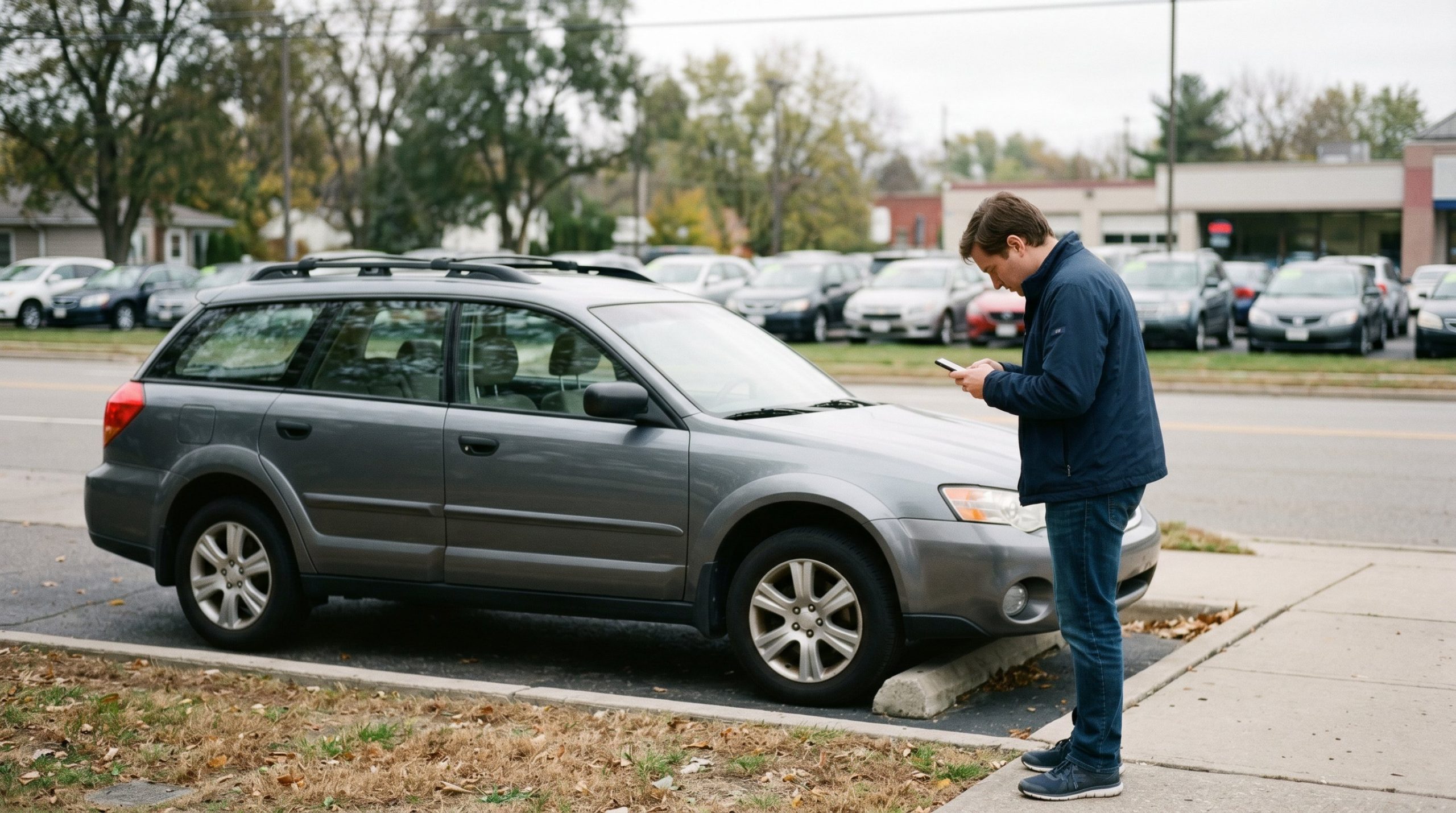
Who pays more for your car, Carvana or a local dealer? It depends on your specific vehicle. Carvana uses a national pricing engine while a local dealer prices to local demand, so neither wins every time. The only way to know which pays more for your car is to get both offers and compare, ideally alongside other competing bids.
If you have decided to sell your car and narrowed it down to either a Carvana online offer or driving to a local dealer for an appraisal, you are looking at two genuinely different pricing models. Carvana uses a national pricing engine that produces one fast, standardized offer. A local dealer uses an in-person appraisal that factors in real-time inventory needs, regional demand, and what is currently selling on their lot. Both produce real binding offers. They just produce different numbers, and which one pays more depends on specific factors about your vehicle and your market.
This is not the Carvana vs CarMax comparison. Both Carvana and CarMax operate on similar national pricing models. This is Carvana versus a local dealer in your area, which is a structurally different comparison. This guide breaks down when each one tends to pay more, what to expect from each process, and how to actually find out which produces the better offer for your specific car.
Free to use. No obligation. Compare competing offers from multiple licensed dealers in your area.
How Carvana and Local Dealers Price Cars Differently
Both buyers ultimately resell vehicles for a profit, but they arrive at acquisition prices through fundamentally different processes. Understanding the difference clarifies when each one is likely to be competitive.
Carvana’s National Pricing Model
Carvana uses a centralized pricing algorithm that takes your vehicle’s basic details (year, make, model, mileage, condition, location) and produces an offer within minutes. The same algorithm runs across the entire country. A 2019 Toyota RAV4 with 65,000 miles in good condition gets priced using the same model whether it is in Phoenix, Cleveland, or Atlanta, with regional adjustments factored in. More on how Carvana’s process actually works.
This produces several specific characteristics. Carvana offers are fast (minutes, not hours). They are consistent in process (every car runs through the same model). And they are typically built around average market conditions rather than current real-time inventory needs in your specific area.
Local Dealer Pricing Model
A local dealer pricing your vehicle factors in things Carvana’s national engine cannot. Specifically: what is currently on their lot, what customers have been actively shopping for this week, what their competing local stores are paying, and what wholesale auctions in their immediate region are producing for similar vehicles.
If your local Toyota dealer has three customers actively looking for a RAV4 in your year and trim, the dealer is willing to pay above standard appraisal to acquire your specific vehicle. If a different local dealer has six RAV4s already sitting on their lot, they will pay below standard appraisal because they do not need more inventory. The same vehicle can produce very different offers across local dealers depending on each store’s specific situation.
When Carvana Tends to Pay More
Several specific situations favor Carvana’s pricing model over a typical local dealer offer.
Common Mainstream Vehicles in Average Condition
Carvana’s pricing model is most accurate on common mainstream vehicles because the underlying transaction data is rich. A 2020 Honda Civic, 2019 Toyota Camry, or 2021 Ford Escape in average condition are vehicles where the national pricing model has thousands of comparable transactions to reference. Local dealers pricing these vehicles often anchor close to Carvana numbers because the broad market clears at predictable levels.
Vehicles with Soft Local Demand But Strong National Demand
Some vehicles do not fit the local market well but have strong demand in other regions. A convertible sports car in Minneapolis, a 4WD pickup in San Francisco, or a luxury sedan in a small market may get a stronger Carvana offer than local dealers because Carvana can ship the vehicle to a market where it sells faster. Local dealers have to sell where they buy, which limits what they will pay for vehicles outside their natural retail demographic.
When Speed Matters More Than Price Optimization
Carvana produces an offer in minutes and can complete the sale within a few business days. A local dealer process typically takes longer because you need to drive to the appraisal, possibly multiple times to compare offers. If your timeline is compressed, the Carvana offer may pay more in practice because the local alternative requires time investment that erodes the price advantage.
When Local Dealers Tend to Pay More
Other situations favor local dealer pricing over the Carvana national model.
CPO-Eligible Vehicles at Franchise Dealers
Vehicles that qualify for manufacturer Certified Pre-Owned programs (typically under 5 years old and under 60,000 to 80,000 miles depending on the manufacturer) sell for thousands of dollars more at franchise dealers than at independent retailers. Carvana cannot offer manufacturer CPO because it is not a franchise dealer. A franchise dealer of your vehicle’s brand can pay above the Carvana number on CPO-eligible vehicles because the retail upside is meaningfully higher.
Vehicles with Strong Local Demand
Trucks in Texas, AWD SUVs in the Northeast in winter, convertibles in coastal California: vehicles that match strong local buyer preferences produce stronger local dealer offers than the national average. Carvana’s national model cannot fully capture the regional premium on these vehicles. Our guide on how much your car is worth covers regional pricing dynamics in more depth.
Specific Inventory Match for a Local Dealer
This is the single biggest variable in Carvana versus local dealer comparisons. When a specific local dealer has active demand for your specific vehicle, that dealer will pay meaningfully above the Carvana number because they have a buyer lined up. The challenge is that you do not know in advance which local dealer has this active demand without contacting multiple stores.
Higher-End and Specialty Vehicles
Luxury vehicles, performance cars, and specialty trims often produce stronger offers from local specialty dealers than from Carvana’s general pricing model. A local Porsche dealer pricing a Cayenne factors in their specific knowledge of the market and their customer base for that vehicle. Carvana’s algorithm treats luxury vehicles competently but rarely captures the premium that specialty knowledge produces.
Free to use. No obligation. See competing offers from multiple licensed dealers in your area.
The Practical Way to Find Out Which Pays More for Your Car
The honest answer to ‘does Carvana or a local dealer pay more’ is that it depends on your specific vehicle, your specific market, and the specific local dealers in your area at this specific moment. The only way to actually find out is to get both kinds of offers and compare.
Path 1: Get a Carvana Offer and Visit Two Local Dealers
Submit your vehicle to Carvana to get the national-model number. Then drive to two local dealers for in-person appraisals. This produces three real comparable offers but takes a full day or longer, and each local dealer knows they are competing only against whoever you have already seen that day.
Path 2: Get Carvana and Use a Multi-Dealer Platform
Submit to Carvana for the national-model offer, then use a multi-dealer platform to get competing offers from multiple local dealers simultaneously. This produces more offers in less time and creates real-time competition among local dealers, which typically surfaces stronger numbers than sequential individual appraisals.
Path 3: Skip Carvana and Use a Multi-Dealer Platform Alone
Multi-dealer platforms that include both local dealers and dealers willing to handle long-distance acquisitions can effectively produce both kinds of offers in a single submission. Clairvo operates this way: you submit your vehicle once, multiple licensed dealers in your area bid against each other, and you see the competing offers on a dashboard. The result functions like getting Carvana, CarMax, and three local dealer offers all at once.
What to Watch For in Each Type of Offer
Both Carvana and local dealer offers have known patterns that affect what you actually receive at closing.
Carvana Re-Inspection Deductions
Carvana’s initial offer is based on your description of the vehicle. When the vehicle is picked up or dropped off, Carvana inspects it. If the inspection finds issues you did not disclose (additional wear, mechanical problems, missing features), Carvana can reduce the offer at that point. The reduction is sometimes meaningful. Our guide on selling to Carvana covers this dynamic in more depth.
Local Dealer Trade-In Conditional Pricing
Some local dealer offers are explicitly conditional on you buying a vehicle from that same dealer. The trade-in number may look strong but factors in a profit margin on your next purchase. If you are selling outright and not buying, ask the dealer for their cash offer specifically rather than their trade-in number.
Time Sensitivity of Both Offers
Both Carvana and local dealer offers typically have time limits. Carvana offers are good for 7 days. Local dealer offers vary but usually expire after 1 to 7 days, and the dealer’s inventory situation can change in that time. Plan to act on offers within the validity window rather than letting them expire and starting over.
Frequently Asked Questions
Does Carvana or a local dealer pay more for my car?
It depends on the specific vehicle and your local market. Carvana tends to pay more on common mainstream vehicles in average condition and on vehicles with soft local demand but strong national demand. Local dealers tend to pay more on CPO-eligible vehicles at franchise stores, vehicles with strong local demand (trucks in Texas, AWD in winter markets), and vehicles where a specific local dealer has active customer demand for your model. The only way to know which is higher for your specific vehicle is to get both kinds of offers and compare.
Why does Carvana offer one price and a local dealer offer something different?
They use different pricing models. Carvana uses a centralized national algorithm based on broad transaction data. Local dealers price based on their specific inventory needs, real-time local demand, and what is selling in their immediate area. The same vehicle can produce different offers from different buyers because each buyer is solving a different equation.
Is it better to sell to Carvana or a local dealer in 2026?
Neither is universally better. Carvana wins on speed, convenience, and process consistency. Local dealers can win on price for the right vehicles in the right markets. The 2026 market specifically has produced volatile pricing across many vehicle categories, which means the gap between Carvana and local dealer offers is larger on some vehicles than in previous years. Getting both kinds of offers is more valuable in 2026 than in stable markets.
Can a local dealer match a Carvana offer if I show them the Carvana number?
Sometimes, but not always. Local dealers price based on their own appraisal of your vehicle and their inventory needs. If your vehicle does not fit a specific local dealer’s needs, they cannot profitably match a higher Carvana number even when shown the offer. The better approach is to put your vehicle in front of multiple local dealers simultaneously so the one with the best inventory match can produce their best offer without having to react to a competitor’s number.
Should I be worried about Carvana lowering the offer at pickup?
Be aware of it, not afraid of it. Carvana re-inspections find genuine issues that affect value, but they can also produce reductions that feel aggressive. Document your vehicle’s condition with photos and a written description before submitting to Carvana. If the inspection finds issues you accurately disclosed, the price should hold. If the inspection finds new issues, you have the option to walk away rather than accept the reduced offer.
What is the fastest way to compare a Carvana offer against multiple local dealers?
Submit your vehicle to a multi-dealer platform that routes your listing to multiple licensed local dealers who bid simultaneously. You see competing offers from local dealers on a dashboard within 24 to 72 hours, which lets you compare them against each other and against the Carvana number you have already received. Clairvo operates this way at no cost to sellers.
Free to use. No obligation. See what dealers in your area will actually pay.