


What are the best alternatives to auctions for sourcing used cars? The main auction alternatives are trade-ins, the service drive, lease and CPO returns, and direct-from-consumer platforms. Each avoids the competition and fees that make auctions the most expensive channel, and each can deliver cars in known condition at a lower cost per unit. Here is what franchise dealers should know.
Auctions are convenient and offer selection, but they come at a price: intense competition, buyer fees, transport, and the risk of units that do not turn. Building alternatives into your sourcing lowers your average cost and reduces dependence on a single channel. For the full sourcing view, see how franchise dealers source used cars in 2026.
Why look beyond auctions
Auction prices are bid up by every dealer in the lane, and the fees and transport add real cost per unit. Worse, a car bought to fill a slot can sit and accrue carrying cost as it ages. Alternatives that deliver cars in known condition at lower cost directly protect gross.
If you want to put real numbers behind that comparison, our dealership ROI calculator for vehicle acquisition lets you model cost per unit across sourcing channels and see how alternatives to the auction lane affect your bottom line.
Trade-ins and the service drive
Your own showroom and service lane are the most overlooked sources. Trade-ins arrive with customer history, and service-drive buys are already on site. Both typically cost less than auction units.
Lease and CPO returns
Off-lease vehicles feed the certified pre-owned pipeline with strong margins and manufacturer support. Availability moves with lease cycles, so it ebbs and flows, but it is a valuable alternative when supply is there.
Direct-from-consumer platforms
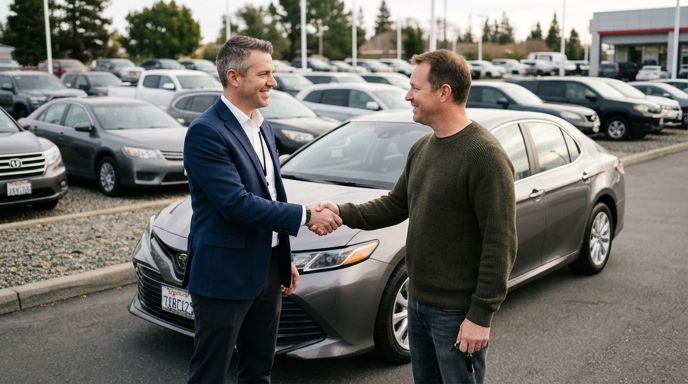
Competing-offer platforms let you buy directly from local owners, reaching clean cars in known condition, often below auction cost, and connecting you with sellers who never visit the lot. This is the fastest-growing auction alternative and central to competing with Carvana and CarMax. For the deeper cost comparison, see used car acquisition cost compared.
Frequently asked questions
Why are auctions so expensive for dealers?
Auction prices are bid up by competing dealers, and buyer fees plus transport add to cost per unit. Slow-turning auction buys also accrue carrying cost, compounding the expense.
What is the best alternative to buying at auction?
There is no single best alternative. Trade-ins and the service drive are lowest-cost, while direct-from-consumer platforms reach clean cars off the lot. A mix reduces cost and dependence on any one channel.
Do auction alternatives deliver better inventory?
Often yes. Trade-ins, service-drive buys, and direct-from-consumer cars tend to arrive in known condition with history, unlike some auction units, which improves turn and lowers reconditioning surprises.
Should dealers stop using auctions entirely?
No. Auctions are useful for filling specific gaps. The goal is to reduce dependence on them by building lower-cost alternatives, not to abandon them completely.
If you want to add a competing-offer channel to your acquisition mix, it costs nothing to see how the Clairvo dealer network fits into the way you already source.
Dealers can also review current listings and requirements directly at dealerforesite.com before reaching out.