


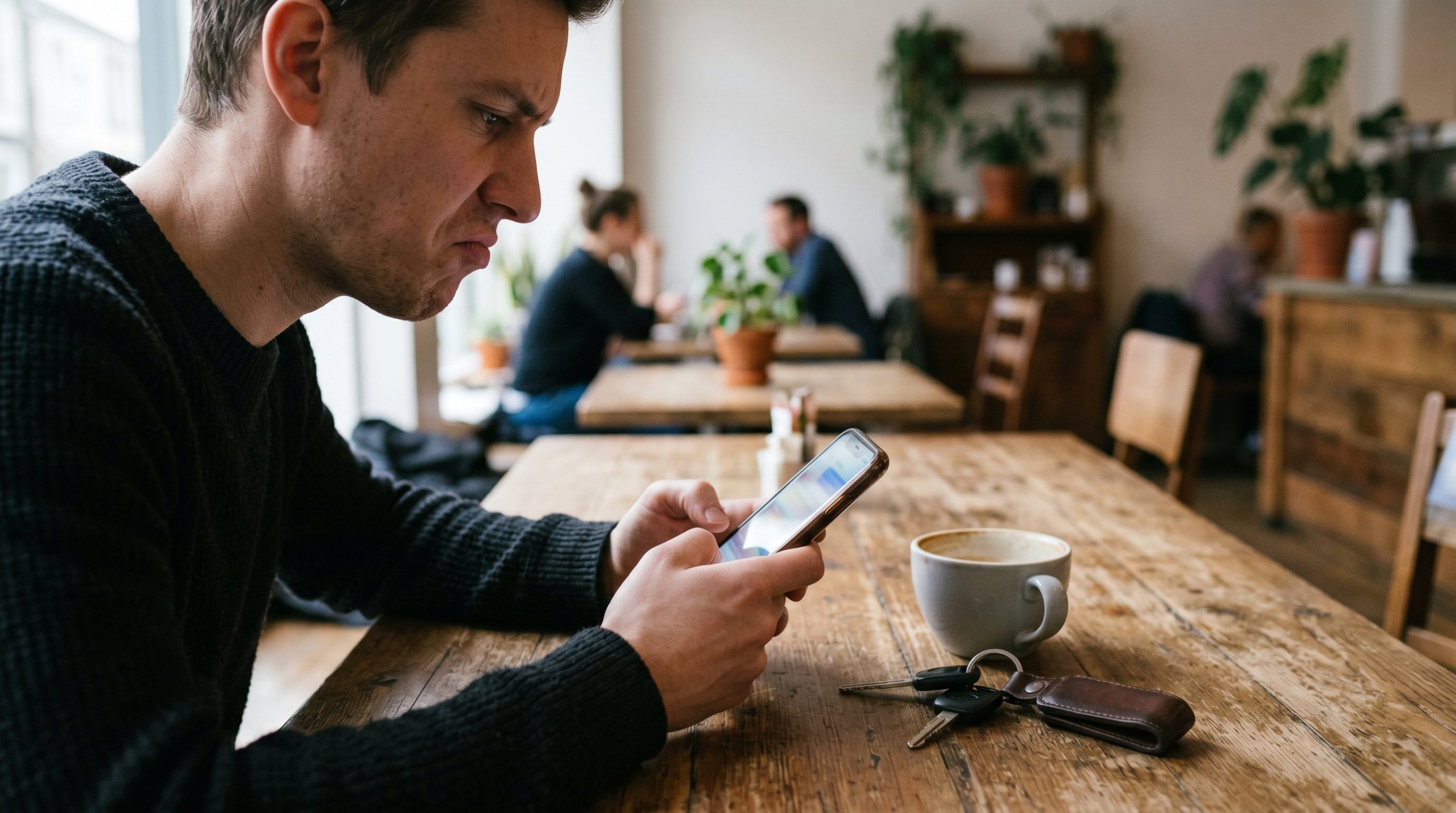
How do you spot scam buyers when selling your car privately in 2026? Watch for the core red flags: overpayment offers, refusal to meet in person, pressure to ship the car, and any request to complete payment through unusual methods. Private sales bring the highest price but the most fraud risk, so verifying cleared payment and meeting safely are what protect you.
Selling a car privately produces the highest sale price in most cases. It also exposes you to scam risk that does not exist when you sell to a dealer. The scam landscape in 2026 is meaningfully different from what it was even three years ago. AI-generated buyer messages have made fraudulent inquiries harder to spot. Payment scams have evolved beyond the classic fake check. Identity theft attempts now move through what looks like a normal sale conversation.
This piece covers the specific scam patterns active in 2026, the red flags that signal a buyer is not legitimate, and the protective practices that keep private sellers safe. The goal is to let you sell privately confidently if that is the right path for your sale, or to make a clear-eyed decision to use a dealer transaction if the risk profile is not worth it.
Free to use. No obligation. Sell to licensed dealers who handle payment, paperwork, and pickup safely.
Why 2026 Is Different from Earlier Years
Three shifts have changed the scam landscape in ways that affect how to evaluate private buyers.
AI-Generated Buyer Messages Are Now Common
Scammers used to be identifiable by broken English, awkward phrasing, and obvious template patterns. AI tools have closed that gap. A scam buyer in 2026 can send a fluent, contextually appropriate message that mentions specific details from your listing. The linguistic giveaways that used to flag fraud are gone.
What replaces them: behavioral patterns, payment requests that do not match how legitimate transactions work, and pressure to move quickly outside of normal channels. Scammers can write well now. They still cannot make a fraudulent payment method legitimate.
Payment Fraud Has Evolved Beyond Fake Checks
The classic scam was an overpayment check that took weeks to bounce. That scam still happens but is less common because most sellers know to refuse checks. The 2026 versions are subtler: Zelle reversals, fake escrow services, fraudulent wire confirmations, and prepaid card schemes that exploit specific platform protections.
Identity Theft Through Normal-Looking Transactions
Some scam buyers are not actually trying to steal the car. They are trying to capture your personal information: VIN, driver license, insurance documents, signature. This data feeds identity theft and financial fraud unrelated to the car sale itself. The seller hands over paperwork as part of what looks like a normal transaction and the fraud happens later.
Red Flags That Indicate a Scam Buyer
None of these on their own confirms fraud. Two or more together usually do.
They Want to Buy Without Seeing the Vehicle
A buyer who is willing to commit to your asking price without seeing the car in person, without asking detailed questions, and without negotiating is almost certainly not legitimate. Real buyers want to inspect, test drive, and negotiate. Buyers who skip all three steps are working a script.
They Want to Pay More Than Your Asking Price
Overpayment offers are a classic scam structure. The buyer wants to pay $25,000 for your $22,000 vehicle, with the extra $3,000 covering shipping or some other manufactured expense, and they need you to forward part of the payment to a third party. The payment to you is fraudulent (bounces or reverses later); the money you forwarded to the third party is gone. Real buyers never offer above asking price.
They Insist on a Specific Payment Method You Did Not Suggest
Be cautious when a buyer insists on a specific payment method that benefits them but is unusual for car sales: Zelle for high-dollar amounts, Western Union, a specific escrow service they recommend, or wire transfer through their bank specifically. Legitimate buyers are usually flexible on payment method and accept standard options like cashier’s check or wire transfer through your bank.
They Communicate Only Through Text or Email
Refusing to speak by phone is a red flag. Real buyers usually want to confirm details by phone before driving to see a vehicle. Buyers who insist on text-only communication are either avoiding voice patterns that might give them away (accent, fluency, regional inconsistencies) or are running multiple scams simultaneously through script-based messaging.
They Are Traveling and Cannot See the Car Themselves
Variations on this script are common: ‘I’m overseas for work, my shipping agent will pick up the vehicle, I’ll send payment through escrow.’ The agent is fake, the escrow is fake, and the goal is to get you to hand over the vehicle to a third party while believing payment is secure. Real buyers see the vehicle themselves before completing payment.
They Push for Speed Outside Normal Channels
Urgency is a manipulation tool. ‘I need to close today, I have other offers, I’ll pay extra if we can wire today.’ Combined with any of the other red flags, urgency confirms fraud. Real buyers move at the pace of normal transactions, which means meeting in person, inspecting, and completing payment through verifiable channels.
Free to use. No obligation. Real licensed dealers who pay through secure standard methods.
Specific Scam Patterns Active in 2026
The Zelle Reversal Scam
Buyer offers to pay through Zelle. You receive what looks like a confirmation. You hand over the vehicle. The Zelle payment is either reversed (if the buyer used a stolen account) or never actually completed (if the confirmation was a screenshot of a fake transaction). Zelle has limited fraud protection for sellers, especially on transactions characterized as person-to-person rather than business purchases.
Protection: do not accept Zelle for vehicle sales above a few hundred dollars. The fraud protection structure does not support seller protection on high-dollar transactions.
The Fake Escrow Service Scam
Buyer recommends an escrow service they have used before. The service has a professional website, claims to hold funds until both parties confirm the transaction, and emails you confirmation that payment has been deposited. The service is fake. The confirmation is fake. The buyer never sent money to the real escrow service the fake one mimics.
Protection: only use established escrow services you find independently (Escrow.com is the most widely recognized legitimate service). Never use an escrow service the buyer recommends or that is linked from their email.
The Shipping Agent Scam
Buyer claims they are out of the country (often overseas military, oil rig worker, or international business) and will send a shipping agent to pick up the vehicle. Payment will come through escrow. You release the vehicle to the agent based on payment confirmation. The payment is fake; the agent disappears with the car.
Protection: do not release a vehicle to anyone except the actual buyer in person. If a buyer cannot pick up the vehicle themselves, they should not be buying it from you remotely.
The Fake Cashier’s Check Scam
Buyer presents a cashier’s check at the meeting. The check looks completely legitimate. You sign over the title, hand over the keys, and deposit the check. Two to three weeks later, your bank notifies you the check is fraudulent and reverses the deposit. The car is gone and so is the money.
Protection: meet the buyer at your bank during business hours. Deposit the check in person and ask the teller to verify it before completing the transaction. If the check is verified, complete the sale. If verification cannot happen, do not transfer the title. Our guide on how to safely sell a car online covers safe transaction practices.
Protective Practices for Private Sales
If you decide to sell privately, structure the transaction to eliminate the fraud surface area.
- Meet at your bank during business hours. Most banks will verify a cashier’s check at the teller window. This single practice eliminates most check fraud.
- Accept only cashier’s check, wire transfer, or cash for high-dollar transactions. Refuse Zelle, Venmo, PayPal, and personal checks for vehicle sales above $500.
- Do not release the vehicle until payment is confirmed. Sign over the title at the same moment you confirm the payment is legitimate. Not before.
- Bring a friend or family member to the meeting. Two people reduce the risk of physical confrontation and provide a witness if anything goes wrong.
- Meet in public places for initial inspections. A bank parking lot, a busy coffee shop parking lot, or a public area with cameras. Save your home address for the final transaction if needed, and only after the buyer is verified as legitimate.
- Verify the buyer’s identity before completing the transaction. Photo of their driver license, matching name on the cashier’s check, matching face to ID. Document this for your records.
- Keep copies of all paperwork. Bill of sale signed by both parties, copy of buyer’s ID, photo of the cashier’s check, photo of the buyer in front of the vehicle. Our guide on documents needed to sell a car covers what to keep on file.
When to Choose a Dealer Transaction Instead
Private sales are not the right path for everyone. Sellers in any of the following situations are typically better served by a dealer transaction even though the sale price is lower:
- You are not comfortable evaluating buyers and screening for scams.
- Your vehicle still has a loan, which complicates private payment and title transfer.
- You live in a state with complex private sale paperwork requirements.
- You need to sell quickly (within a week) and do not have time to manage multiple buyer inquiries.
- You are concerned about meeting strangers at your home or about your personal safety.
Our breakdown of selling privately versus to a dealer covers the tradeoffs in more depth. The short version: a dealer transaction trades some sale price for transaction simplicity, payment security, and speed. For many sellers, the tradeoff is worth it.
Frequently Asked Questions
What are the most common car selling scams in 2026?
The most active scam patterns in 2026 are the Zelle reversal scam (buyer pays through Zelle, then the payment is reversed after you release the vehicle), the fake escrow service scam (buyer recommends an escrow service they control, which fraudulently confirms payment), the shipping agent scam (buyer claims to be overseas and sends an agent to pick up the vehicle based on fake escrow confirmation), and the fake cashier’s check scam (a counterfeit check that looks legitimate but bounces weeks after the sale).
How do I spot a fake buyer when selling my car?
Watch for these patterns combined: willingness to buy without seeing the vehicle, offers above your asking price, insistence on a specific unusual payment method, refusal to communicate by phone, claims of being out of the country, and pressure to close quickly outside normal channels. One of these on its own may not indicate fraud, but two or more combined almost always does.
Is selling a car on Facebook Marketplace safe in 2026?
It can be safe if you follow protective practices: communicate only through Marketplace messaging, meet buyers in public places for initial inspection, refuse instant payment methods like Zelle or Venmo for high-dollar sales, complete the final transaction at your bank with a verified cashier’s check, and never release the vehicle until payment is confirmed. Facebook Marketplace itself does not provide seller protection on vehicle transactions, so all the safety work is on you.
What payment methods should I refuse when selling a car privately?
Refuse Zelle, Venmo, PayPal, personal checks, money orders from unfamiliar issuers, and any escrow service the buyer recommends rather than one you found independently. These methods either lack seller protection (Zelle, Venmo) or are commonly used in scam patterns (specific recommended escrow services). Accept cashier’s check verified at your bank, wire transfer that has cleared in your account, or cash for the full amount.
Are dealer offers actually safer than private sales?
Yes, structurally. A licensed dealer handles payment through secure standard methods, completes paperwork according to state requirements, and assumes the transaction risk. There is no scam exposure on the seller side because the dealer is a verifiable legal entity rather than an unknown private party. The tradeoff is that dealer offers are typically 10 to 20 percent below what a private sale can produce, in exchange for eliminating fraud risk, transaction complexity, and time investment.
Free to use. No obligation. Skip the scam risk entirely with licensed dealers.


