


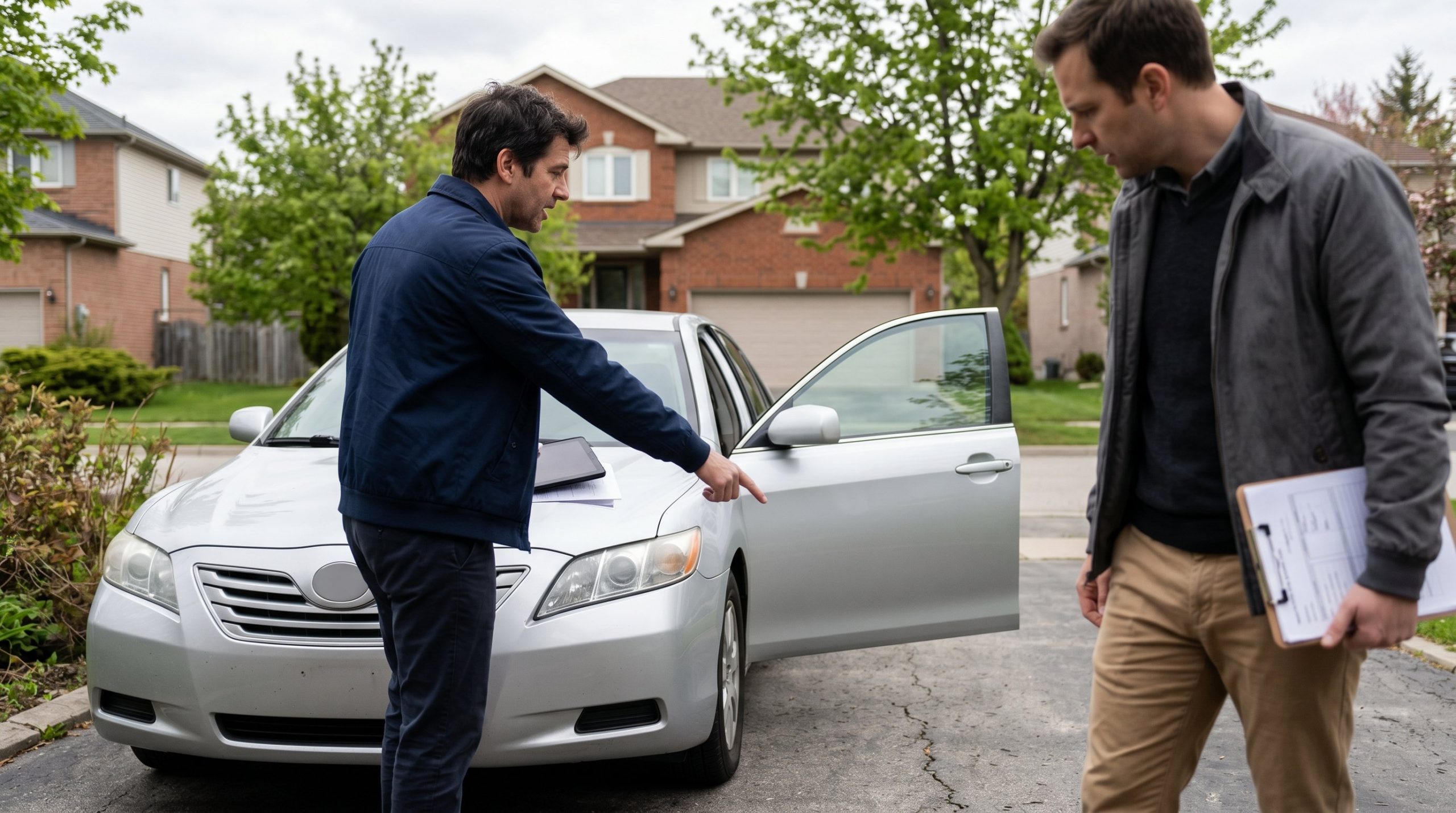
What should you do when a buyer lowers their offer at pickup? Do not feel pressured to accept the reduced number. If you have competing offers in hand, you can decline and go to the next buyer. A last-minute price drop is a common tactic, and having alternatives is what protects you from being cornered into a bad deal.
You got a great offer online. The number was higher than anyone else quoted. You scheduled the pickup, cleaned out the car, mentally spent the money. Then the inspector showed up, walked around the vehicle, and the offer dropped by $1,800. This scenario plays out constantly with online car buyers, and it is one of the most frustrating experiences in selling a car. Understanding why it happens, when it is legitimate, and how to protect yourself changes the dynamic.
This piece covers what to do when a buyer tries to lower their offer at pickup or inspection: why it happens, how to tell a legitimate adjustment from a lowball tactic, and how to structure your sale to avoid the situation entirely. Our guide on how to know if you are getting a good offer covers offer evaluation more broadly.
Free to use. No obligation. See competing offers from licensed dealers who honor their numbers.
Why Online Buyers Lower Offers at Pickup
The Initial Offer Is Based on Your Description
Online instant offers are generated from the information you provide: year, make, model, mileage, condition rating, and your answers to condition questions. The buyer has not seen the vehicle. The offer is a conditional estimate based on the assumption that your description is accurate. When the inspector arrives, they verify the description against the actual vehicle, and any discrepancy becomes a basis for adjustment.
Some Adjustments Are Legitimate
If you rated your vehicle’s condition as excellent but it has door dings, a cracked windshield, worn tires, and a check engine light, the inspector is correctly identifying that the vehicle is not in the condition the offer was based on. This is a legitimate adjustment. The original offer was for a vehicle in better condition than the one being sold.
Some Adjustments Are Tactics
Other adjustments are lowball tactics that exploit the seller’s psychological commitment. By the time the inspector arrives, the seller has mentally committed to the sale. They have cleaned out the car, made plans for the money, and arranged their schedule. A buyer who lowers the offer at this point is betting that the seller’s commitment will override their willingness to walk away. This is a deliberate strategy at some buyers, not an accident.
How to Tell Legitimate From Lowball
Did They Identify Specific, Verifiable Issues?
A legitimate adjustment comes with specifics: ‘the tires are at 3/32 and need replacement, that is a $700 deduction’ or ‘there is a check engine light for an emissions code, that is a $500 deduction.’ A lowball comes with vagueness: ‘the condition is not quite what we expected’ or ‘market conditions changed.’ Specific and verifiable points to a legitimate adjustment; vague and unverifiable points to a tactic.
Does the Deduction Match the Issue?
Even when an issue is real, the deduction should be proportional. A small door ding is a $100-$200 cosmetic item, not a $1,000 deduction. If the buyer identifies a real but minor issue and attaches an outsized deduction to it, that is a tactic dressed up as a legitimate adjustment.
Did You Accurately Describe the Vehicle?
Be honest with yourself. If you rated the vehicle as excellent when it was actually good, the adjustment may be legitimate even if it stings. The original offer was based on your rating. If your rating was optimistic, the corrected offer reflects reality.
Free to use. No obligation. Compare offers from multiple licensed dealers at once.
What to Do When It Happens
Do Not Accept on the Spot Just Because You Are Committed
The psychological commitment is exactly what the tactic exploits. If the offer drops meaningfully and the explanation is vague, you are allowed to say no. The car is still yours. You can decline the reduced offer, send the inspector away, and pursue other buyers. Your prior mental commitment to the sale is not a contract.
Ask for the Specific Basis
Make the buyer justify the reduction item by item. ‘Walk me through exactly what changed from the original offer.’ A legitimate adjustment survives this question with specifics. A tactic falls apart because there is nothing specific behind it.
Have a Backup Offer Ready
The single best protection is having another offer in hand. If you have a competing offer from another buyer, a lowball at pickup is easy to reject because you have an alternative. This is why getting multiple offers simultaneously is structurally protective: you are never dependent on a single buyer who can exploit your commitment.
Know Your Walk-Away Number
Before the pickup, decide the lowest number you will accept. If the adjusted offer is above your walk-away number and the deductions are at least partially legitimate, it may still be worth taking. If it drops below your walk-away number, decline. Having the number decided in advance removes the in-the-moment pressure from the decision.
How to Avoid the Situation Entirely
Describe Your Vehicle Accurately From the Start
The most common cause of legitimate pickup adjustments is optimistic self-description. Rate your vehicle’s condition honestly, disclose known issues upfront, and provide accurate mileage. An offer based on an accurate description is far less likely to change at pickup because there is nothing for the inspector to discover.
Document Your Vehicle’s Condition Before the Offer
Take dated photos of the vehicle’s actual condition before requesting offers. If a buyer tries to claim an issue that did not exist or exaggerate one that did, your documentation is evidence. This also helps you describe the vehicle accurately because you are working from a real inventory of its condition.
Use Buyers Who Lock Their Offers
Some buyers and platforms structure their offers to hold from quote to payment, with no pickup re-inspection adjustment. Multi-dealer platforms where licensed dealers bid competitively tend to produce offers that hold, because the dealers are bidding on a vehicle they intend to acquire rather than generating a lead they plan to renegotiate. Our guide on selling to Carvana covers how the instant-offer model handles inspections.
Frequently Asked Questions
Why did Carvana lower my offer at pickup?
Online instant offers are based on the description you provide, not on an actual inspection of the vehicle. At pickup, the inspector verifies your description against the real vehicle. If they find issues you did not disclose (additional wear, mechanical problems, missing features), they adjust the offer. Some adjustments are legitimate corrections for a vehicle in worse condition than described; others are lowball tactics that exploit your commitment to the sale. Ask for the specific item-by-item basis for any reduction.
Can a car buyer change their offer after agreeing to a price?
Yes, if the offer was conditional on an inspection, which most online instant offers are. The initial offer is based on your description and is subject to verification at pickup. However, you are never obligated to accept a reduced offer. If the buyer lowers the price and the explanation is vague or the deduction is disproportionate to the issue, you can decline and pursue other buyers. Your prior agreement to the original price is not binding if the buyer changes the terms.
What do I do if a dealer reduces their offer at pickup?
Ask for the specific, item-by-item basis for the reduction. A legitimate adjustment comes with verifiable specifics (tire wear, a check engine code, documented damage) and a proportional deduction. A lowball comes with vague justifications and outsized deductions. Do not accept on the spot just because you are committed to the sale. Have a backup offer ready and know your walk-away number in advance so you can decline a bad-faith reduction without pressure.
How do I avoid getting my offer lowered at pickup?
Describe your vehicle accurately from the start, disclose known issues upfront, and provide accurate mileage and condition ratings. Document the vehicle’s condition with dated photos before requesting offers. Most importantly, get multiple competing offers so you are never dependent on a single buyer who can exploit your commitment. Some multi-dealer platforms produce offers that hold from quote to payment because the dealers are bidding on a vehicle they intend to acquire rather than generating a lead to renegotiate.
Free to use. No obligation. Multiple licensed dealers compete with offers they honor.