

Reconditioning is the quietest margin killer in the used car business. Acquisition price gets all the attention because it is the big visible number, but the gap between a clean acquisition and a rough one can swing $1,500 or more in reconditioning cost per unit, and that swing comes straight out of front-end gross. In 2026, with reconditioning labor and parts costs both elevated and acquisition margins already compressed, the quality of the vehicles you acquire matters more than it has in years.
This piece breaks down what reconditioning actually costs in 2026, why the acquisition channel you use is the single biggest predictor of reconditioning expense, and how to factor recon into acquisition decisions rather than treating it as a downstream surprise. Our analysis of how dealers source inventory in 2026 covers the broader sourcing picture.
Free to evaluate. Clairvo vehicles come directly from consumer owners with documented history.
What Reconditioning Actually Costs in 2026
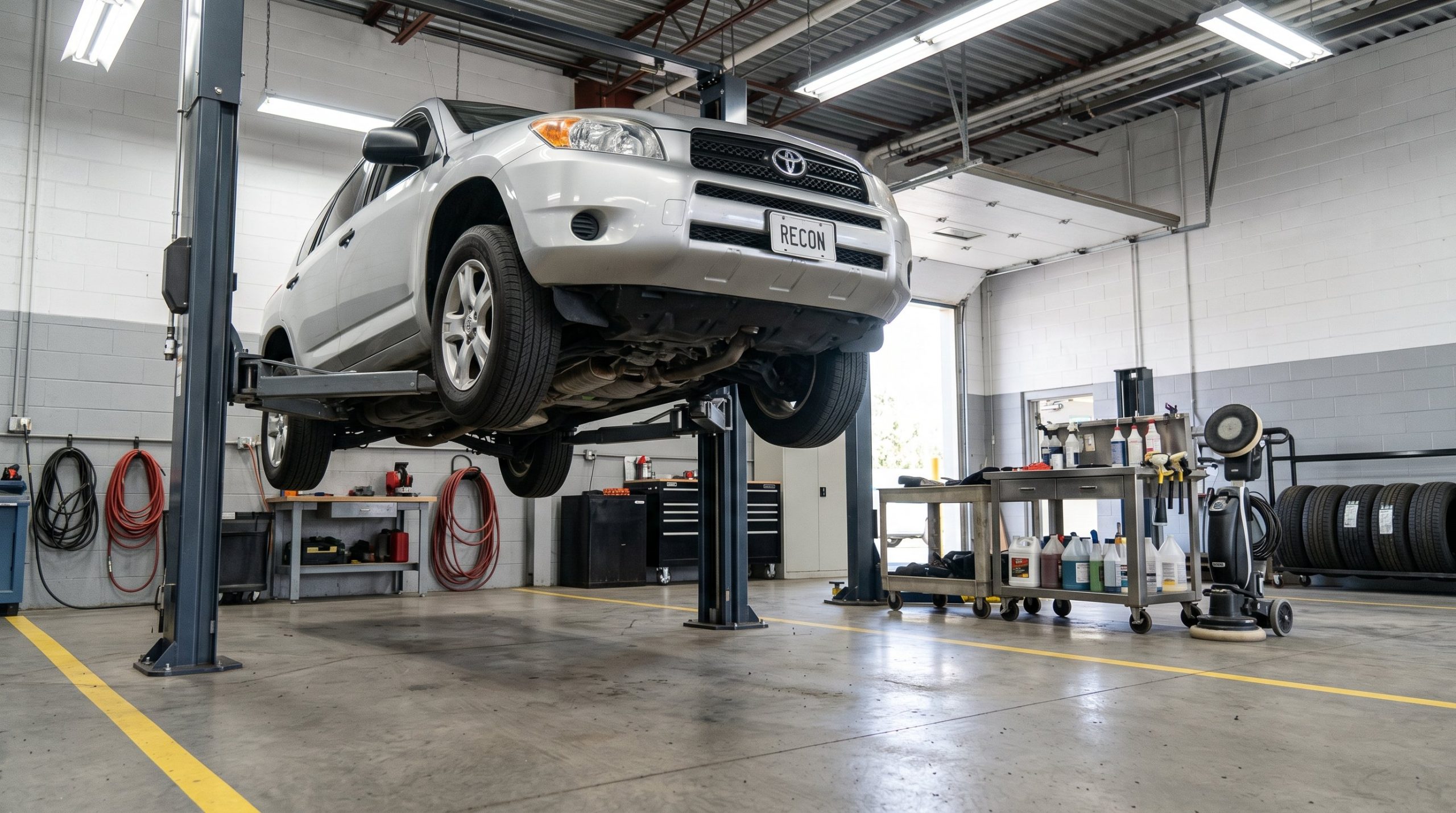
Reconditioning cost varies enormously by vehicle and source, but the category breakdown is consistent. Understanding where the money goes helps identify where acquisition quality matters most.
Mechanical Reconditioning
Brakes, tires, fluids, batteries, and any diagnostic-flagged repairs. On a typical mainstream used vehicle this runs $300 to $900 depending on condition. Tires alone can be $600 to $1,000 on a vehicle that needs a full set. Mechanical recon is the highest-variance category because it depends entirely on how the previous owner maintained the vehicle.
Cosmetic Reconditioning
Paint correction, dent removal, wheel repair, interior repair, and trim replacement. Runs $200 to $1,200 depending on condition. Auction vehicles tend to need more cosmetic work because they have often passed through multiple owners or fleet use. Direct-from-consumer vehicles from a single owner typically need less.
Detail and Presentation
Full detail, photography prep, and presentation work to make the vehicle retail-ready. Runs $150 to $350 consistently across most vehicles. This is the most predictable category and the least affected by acquisition source.
The Combined Number
Total reconditioning on a typical mainstream used vehicle runs $650 to $2,450 depending on condition and source. The spread is the whole story: a clean direct-from-consumer vehicle lands near the bottom of that range, an auction unit of unknown history lands near the top. On a vehicle acquired with $2,500 of target gross, the difference between $650 and $2,450 of recon is the difference between a profitable unit and a breakeven one.
Why Acquisition Channel Predicts Reconditioning Cost
Auction Vehicles: Higher and Less Predictable
Auction units come with limited history. You see a condition report and a few photos, but you cannot ask the previous owner about the vehicle, you cannot see complete service records in most cases, and fleet or rental history is common. The result is higher average reconditioning costs and, more importantly, higher variance. A meaningful percentage of auction units turn out to need more work than the condition report suggested. Our analysis of the off-lease shortfall covers why auction quality has degraded as supply tightened.
Trade-In Vehicles: Moderate and Knowable
Trade-ins come with the advantage that you can inspect the vehicle and talk to the owner before acquiring. You know the service history if the customer serviced with you. Reconditioning is moderate and more predictable than auction because you have information about the vehicle before you commit.
Direct-From-Consumer Vehicles: Lower and Most Predictable
Direct-from-consumer vehicles typically come from a single owner who maintained the vehicle for personal use. You can inspect the vehicle, review service records, and ask the owner directly about the vehicle’s history before acquiring. The result is the lowest average reconditioning cost and the lowest variance of any channel. Clairvo’s model routes these single-owner vehicles directly to participating dealers.
Free to evaluate. Direct-from-consumer vehicles need less work and reach the lot faster.
How to Factor Reconditioning Into Acquisition Decisions
Build a Reconditioning Estimate Into Every Appraisal
The biggest mistake stores make is treating acquisition price and reconditioning as separate decisions. They are the same decision. A vehicle that costs $1,000 less to acquire but needs $1,500 more in reconditioning is the worse buy. Every appraisal should include a reconditioning estimate based on a physical inspection, and the acquisition decision should be made on the all-in cost.
Track Reconditioning Variance by Source
Stores that track actual reconditioning cost against estimated reconditioning cost, broken out by acquisition channel, quickly see which channels produce predictable costs and which produce surprises. This data makes the case for shifting acquisition mix toward channels with lower reconditioning variance.
Prioritize Clean Acquisitions Even at Higher Acquisition Price
Once you have the data showing reconditioning cost by channel, the logic usually points toward paying slightly more for cleaner vehicles. A direct-from-consumer vehicle at $500 above auction price that needs $1,200 less reconditioning is a net win of $700 plus the downstream benefit of faster time-to-list.
The Time-to-List Dimension
Reconditioning cost is only half the story. Reconditioning time is the other half. A vehicle that needs extensive mechanical and cosmetic work sits in the recon queue for days or weeks before it can be listed, accumulating carrying cost the whole time. A clean vehicle that needs only inspection and detail can be photo-ready in 3 to 5 days.
This means clean acquisitions produce a double benefit: lower direct reconditioning cost and faster time-to-list, which reduces carrying cost during the reconditioning period. The combined effect on per-unit profitability is larger than the reconditioning cost difference alone.
Frequently Asked Questions
How much do dealers spend on reconditioning per vehicle?
Total reconditioning on a typical mainstream used vehicle runs $650 to $2,450 depending on condition and acquisition source, broken into mechanical reconditioning ($300-$900), cosmetic reconditioning ($200-$1,200), and detail and presentation ($150-$350). Clean direct-from-consumer vehicles land near the bottom of the range; auction units of unknown history land near the top.
Why are reconditioning costs higher on auction vehicles?
Auction units come with limited history. You cannot inspect them as thoroughly, you rarely have complete service records, and fleet or rental history is common. This produces both higher average reconditioning costs and higher variance, meaning a meaningful percentage of auction units need more work than the condition report suggested. Direct-from-consumer vehicles from single owners typically need less work and have more predictable costs.
How should dealers factor reconditioning into acquisition decisions?
Treat acquisition price and reconditioning as a single decision rather than separate ones. Build a reconditioning estimate based on physical inspection into every appraisal, and make the acquisition decision on all-in cost. A vehicle that costs $1,000 less to acquire but needs $1,500 more in reconditioning is the worse buy. Track actual versus estimated reconditioning by channel to identify which sources produce predictable costs.
Do direct-from-consumer vehicles really need less reconditioning?
Yes, on average. Direct-from-consumer vehicles typically come from a single owner who maintained the vehicle for personal use, and you can inspect the vehicle and review service history before acquiring. This produces the lowest average reconditioning cost and lowest variance of any acquisition channel. The clean acquisition also reaches the lot faster, reducing carrying cost during the reconditioning period.
Acquire cleaner inventory with lower reconditioning costs and faster time-to-list.